Stainless Steel vs Carbon Steel Pipes: Which One Should You Use?
08/ Jun, 2026
Nobody photographs the pipes. They run behind walls, under roads, through plant racks, moving fluid and gas and carrying load while the building or the machine gets all the attention. You forget they're there. Right up until one rusts through or lets go under pressure, and then the cheapest item on the drawing turns into the most expensive afternoon of the project.
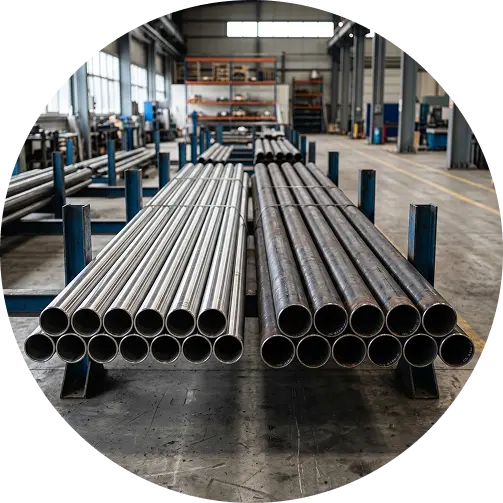
Almost all of them are one of two metals. Stainless steel, or carbon steel.
Both show up everywhere: refineries, water networks, food plants, structural frames, plumbing, long pipelines across open country. Choosing between them is a call engineers and buyers make over and over, and it settles three things in one go. How long the line survives. What it costs to keep running. Whether it holds up under whatever you put it through.
The penalty for guessing is real. Bare carbon steel on a coastal job will be flaking inside a year. Stainless on a dry structural run means you've paid two or three times over for rust protection you were never going to need.
And demand keeps rising on both sides. Energy projects, desalination, pharma and food lines, the building boom across Asia and the Gulf, all of it wants piping that behaves the same way in year fifteen as it did on day one.
This guide tackles the carbon steel pipe vs stainless steel question the way a live project runs into it. What each metal actually is. Where each one belongs. And how the Carbon steel vs stainless steel pipe call breaks down once you weigh corrosion, strength, cost, and the upkeep nobody budgets for.
If you only read one paragraph, read this. A stainless steel pipe is your answer when corrosion, hygiene, or a long hands-off life are what's driving the spec. A carbon steel pipe is your answer when you need strength and pressure for less money and the environment isn't trying to eat the metal. The rest of this is just learning to tell those two cases apart.
What is Stainless Steel Pipe?
It comes down to one ingredient. Chromium. A stainless steel pipe is steel with enough chromium in it to fight off rust by itself, no paint, no coating, no minding.
Composition and Properties
The magic number is about 10.5 percent. Hit that much chromium and the steel forms a thin oxide skin you can't even see. What makes it useful is that the skin heals. Gouge the surface and it knits back together wherever bare metal meets air, which is the whole reason stainless doesn't bleed rust the way plain steel does.
Chromium gets the credit, but it doesn't work alone. Nickel brings toughness and makes the metal easier to bend and form. Molybdenum, the pricey one, is what buys resistance to chlorides and acids. In piping you'll mostly run into 304 and 304L for ordinary corrosion duty, then 316 or 316L once seawater or chlorides or nasty chemicals enter the picture (316L being the one people reach for when there's a lot of welding). On paper these land under ASTM A312 for pipe, A213 for tube.
There's one more thing worth knowing. Stainless holds onto its strength across a huge temperature spread, from deep cold up into hot service, and that single property is half the reason it ends up in heat exchangers and condensers.
Learn More: Stainless Steel Pipe Grades Explained: Complete Industrial Guide
Key Characteristics
A few traits do most of the selling:
- It simply doesn't rust, wet conditions included, so there's nothing to coat.
- It lasts. Decades, often, with the metal barely changing, which means you're not back replacing it.
- It barely needs you. No repainting, wipes clean easily, and that matters enormously in a hygienic or regulated plant.
Common Applications
Where does it earn its price tag? Anywhere a trace of contamination or corrosion is a dealbreaker. Food processing depends on it because surfaces have to stay clean and sanitizable, full stop. A stainless steel pipe for chemical industry job is everyday work, since it shrugs off acids that would hollow out carbon steel. And on marine or coastal sites, where salt air goes after ordinary steel fast, 316 is frequently the only grade anyone sensible will sign off on.
What is a Carbon Steel Pipe?
Here's the workhorse. A carbon steel pipe is mostly iron and carbon and not much else, certainly no real chromium. You trade away corrosion resistance and you get strength and a far smaller invoice in exchange.
Composition and Properties
The recipe's plain enough: iron, carbon, and small doses of manganese, silicon, sulphur, phosphorus. Carbon is the dial. Turn it up for more hardness and tensile strength, but you lose some ductility and the welding gets fussier, so grades get matched to the work rather than chosen at random.
What it's genuinely good at is taking load and holding pressure. That's why pipelines and structures are full of it. You can read the intent in the grades, A106 (in Grades A, B, and C, though Grade B is what gets quoted most) for hot seamless service, A333 for cold work, API 5L for transmission lines. The downside never leaves the room though. Expose it to damp air and it rusts.
People always ask how seamless fits in, so on the Seamless carbon steel pipes vs stainless steel pipes point: both metals come seamless and welded. Seamless is pierced straight from a solid billet instead of rolled and welded from plate, which means no seam to fail. For high-pressure, high-temperature lines, in either material, seamless is the one you want.
Key Characteristics
The pitch is short:
- Cheap, comparatively. Lower on raw material, lower on fabrication.
- Strong where it counts, with the load-bearing capacity that structural and high-pressure work demands.
- But it needs covering up. Coat it, paint it, or galvanize it, or it corrodes in a hurry once things get wet.
Common Applications
The spread of carbon steel pipe applications in industries is genuinely wide. Oil and gas pipelines run on it because it pushes crude, gas, and products across enormous distances at pressure for pennies on the stainless rupee. Structural engineering uses it for columns, piling, frames. A great deal of industrial fluid transport, steam, process water, that sort of thing, sits in carbon steel too, as long as whatever's flowing through isn't chemically aggressive.
Carbon Steel Pipe vs Stainless Steel: Key Differences
This is the section most people scrolled down for. The entire Carbon steel vs stainless steel debate traces back to one element, and honestly the Difference between carbon steel and stainless steel is that basic at the chemistry level: chromium, or no chromium. But that one swap fans out into five differences that decide actual jobs.
Corrosion Resistance
The big one, no surprise. Talk about Stainless Steel vs Carbon Steel Pipe Corrosion Resistance and it's barely a contest. Stainless fends off rust, acids, and salt on its own. Carbon steel starts corroding the second its coating fails or the air turns damp. Inside a dry, controlled plant that might never bite you. Put the same pipe by the sea, or in a chemical line, and it rewrites the whole decision.
Strength and Durability
Now the gap shrinks, and it can even reverse. Carbon steel grades reach very high tensile strength and ride out fatigue nicely under mechanical load, which is precisely why structures and pipelines lean on them. Stainless is strong as well, and far tougher where corrosion is the enemy. The line to hold in your head: stainless lasts longer because it won't corrode, carbon steel lasts longer under load provided you keep it dry and coated. Two different kinds of "lasts longer."
Cost Comparison
At the counter it's not close. Carbon steel wins. Drop the chromium, nickel, and molybdenum and the price falls off a cliff. That's the purchase price though, and purchase price is only half the story, as the lifecycle section below gets into.
Maintenance Requirements
Stainless is roughly fit-and-forget. Nothing to recoat, easy to clean, hardly any fuss. Carbon steel is the opposite character: inspect it, repaint it, recoat it, watch it for corrosion, year after year. Spread that across a 20-year life and the bill is bigger than it looks on day one.
Temperature and Pressure Handling
Both can take punishment, just in different ways. On High-pressure carbon steel pipes vs stainless steel, carbon grades like A106 carry heavy pressure cheaply and stay reliable when it's hot, which fits steam and pipeline service. Stainless covers a wider band, cryogenic included, and crucially it keeps performing in corrosive high-temperature media that would quietly destroy carbon steel.
Carbon Steel Pipe vs Stainless Steel Pipe: Performance Comparison Table
| Factor | Stainless Steel Pipe | Carbon Steel Pipe |
|---|---|---|
| Durability | Excellent, resists corrosion for decades | High under load, degrades if coating fails |
| Initial cost | Higher | Lower |
| Corrosion resistance | Very high, no coating needed | Low, needs a protective coating |
| Maintenance | Low, minimal upkeep | Higher, regular inspection and recoating |
| Strength | Strong, stable across a wide temperature range | Very high tensile and load-bearing strength |
| Best suited for | Corrosive, hygienic, long-life work | High-pressure, structural, cost-sensitive work |
Advantages of Stainless Steel Pipes
The case for stainless is really a case about what you don't have to deal with later. It runs for decades without much degradation, so replacements stay off your schedule. It stays hygienic and cleans up easily, which isn't a nice-to-have in food, dairy, or pharma lines, it's the requirement. It holds together in corrosive settings that would finish off ordinary steel. And it looks right, with a clean finish that suits exposed architectural and process installations where the pipe is on show.
Advantages of Carbon Steel Pipes
Carbon steel's case is about getting strength without spending the earth. The upfront cost is low, which leaves a budget for the rest of the build. The strength is genuine where the pipe is carrying real load. It's the natural pick for heavy-duty and high-pressure work, pipelines and piling alike. And it's easy to get hold of, across a broad spread of sizes and grades, usually with shorter lead times than stainless.
Which One Should You Choose?
Push the theory aside and it nearly always reduces to two questions. What's the environment, and what does this asset cost across its whole life rather than just on the day you buy it.
Choose Stainless Steel Pipe if:
Corrosion resistance is non-negotiable because the line meets moisture, chemicals, salt, or food. Or you're playing the long game and want low maintenance and a long service life, even knowing it costs more today.
Choose Carbon Steel Pipe if:
The budget is the wall you keep hitting and the environment is dry or controlled. Or you need high strength for structural or high-pressure industrial use, where load is the priority and rust isn't really in the conversation.
Industry Use Cases Comparison
On most real sites you'll find both, each doing the part it's suited to. Roughly how it tends to split:
- Construction: carbon steel owns the structural and load-bearing work, which is why steel pipe manufacturers for construction and infrastructure ship a lot more carbon than stainless by weight. Stainless shows up in the exposed, architectural, or corrosion-prone bits.
- Oil and gas: carbon and alloy grades haul the transmission and process load over distance, so industrial steel pipes for oil and gas industry skew heavily carbon. Stainless and duplex get brought in for sour service, offshore, and corrosive streams.
- Water supply: stainless for potable and hygiene-sensitive lines, coated carbon steel for the big transmission mains where cost calls the shot.
- Chemical processing: stainless, usually 316, the moment acids or reactive media turn up. Carbon steel stays on utilities and the non-corrosive stuff.
Cost Analysis: Short Term vs Long Term
Here's where plenty of specs quietly come undone. The pipe that's cheaper to buy is not automatically the cheaper pipe to own.
Short term, carbon steel wins on purchase price almost every time. Dry environment, short project life? Take the saving, it's real and there's no catch.
Long term is where it can flip on you. Stick carbon steel somewhere corrosive and it keeps charging you: coatings, inspections, repainting, corrosion monitoring, on and on. It also wears out sooner, and a replacement is never just a length of pipe, it's the downtime and the labour wrapped around swapping it. Stainless asks for more on day one and then mostly leaves you in peace. Run the comparison over 15 or 20 years in corrosive service and the stainless line frequently comes out ahead once maintenance and replacements go into the sum.
The advice is boring and correct: cost it over the life of the asset, not over the purchase order.
Check out: Stainless Steel Pipe Price List India 2026: Per Kg, Sizes & Grades
Common Mistakes to Avoid When Choosing Pipes
Most failures and overspends come back to the same short list of mistakes. Ignoring the environment is the classic one, choosing carbon steel for a humid or marine or chemical site because it is priced better, then paying it all back in rust. Close behind is buying on price alone, where the lowest quote conveniently leaves out years of maintenance and replacement. Forgetting maintenance altogether is its own trap, because coated carbon steel carries a running cost that stainless mostly doesn't. And skipping the pressure and temperature check is the dangerous one, since a grade that can't handle the conditions isn't a performance problem, it's a safety one.
Sourcing From a Trusted Manufacturer
All of this falls apart if the pipe itself isn't made properly. The metal only delivers if whoever made it did the job right.
Heavy Metal & Tubes (India) Pvt. Ltd. is India's No.1 Steel pipe manufacturer and a maker of carbon and alloy steel tubes and pipes, with more than four decades behind it and three plants in Gujarat. It runs the whole chain in-house, from round bar to finished tube, turns out both seamless and welded pipe in lengths up to 34 metres, and manufactures to ASTM, ASME, DIN, JIS, BS, IS, and GOST standards. The products carry approvals from major EPCs, PMCs, consultants, and OEMs across oil and gas, refineries, chemical and petrochemical, power, pharma, and fertilizer plants.
As one of the established stainless steel pipes manufacturers in India, and a name trusted among carbon steel pipe manufacturers in India, the team can help you settle on the right grade and form for your conditions instead of leaving it to guesswork. To talk through a requirement, write to info@hmtl.in.
Final Verdict: Stainless Steel vs Carbon Steel Pipes
Neither metal is the winner in a vacuum. Stainless steel is right when corrosion, hygiene, or a long maintenance-free life are steering the project. Carbon steel is right when strength, pressure, and budget are steering it, and nothing in the environment is fighting the metal.
Match the pipe to the conditions and to the lifecycle cost, not to whatever you reached for last time. Do that and the pipe goes back to being the thing nobody has to think about, which was always the point.