Top 7 Things to Check Before Buying Seamless Stainless Steel Pipes
23/ Mar, 2026
If you’ve been part of even one serious industrial purchase, you’ll know this already: pipe selection rarely feels complicated at the beginning. You compare vendors, check specs, align budgets, and move forward. Whether it’s a stainless steel seamless pipe or any other material, everything looks fairly standard on paper.
And yet, a few months into operation, things start to feel… slightly off. Not failures exactly. But differences. One section handles pressure differently. Slight wear where you didn’t expect it. Nothing dramatic, but enough to make you think back to the purchase stage.
That’s usually when the question comes back:
Did we really check everything before we decided to buy?
When you buy seamless stainless steel pipe, the decision doesn’t just affect installation; it affects how the system behaves over time. And most issues, when they happen, are not because of one big mistake. They come from small things that didn’t get enough attention early on.
1. Choose the Right Stainless Steel Pipe Grades for Seamless Stainless Steel Pipes
This is where most decisions quietly go wrong. Not because people don’t know the grades, but because they assume one will work “well enough.”
Common Stainless Steel Seamless Pipe Grades (SS 304, SS 316, SS 316L, SS 321)
You’ll usually come across:
SS 304 seamless pipe – suitable for general applications
SS 316 seamless pipe – better resistance to corrosion
SS 316L seamless pipe – improved durability due to low carbon content
SS 321 seamless pipe – preferred in high-temperature environments
All of these fall under stainless steel pipe grades, but they are not interchangeable.
If the environment includes chemicals, moisture, or temperature variation, selecting the right stainless steel seamless pipe grade becomes critical. It may not show immediately—but over time, it defines performance.
2. Check Cold Drawn vs Hot Finished SMLS Pipe Manufacturing Type
This is one of those things that often gets skipped because everything “looks fine.”But not all SMLS pipe is manufactured the same way.
Types of Seamless Pipes: Cold Drawn Seamless Pipe vs Hot Finished Seamless Pipe
Cold-drawn pipes tend to have tighter tolerances and smoother finishes. They’re usually preferred where precision matters.
Hot-finished pipes are better suited for heavy-duty use and environments where stress and temperature are higher.
If you’re working with industrial stainless steel pipes, this difference doesn’t always show up immediately, but it does show up eventually.
Also See : Types of Stainless Steel: A Complete Guide
3. Review Stainless Steel Seamless Pipe Specification
Most buyers check diameter and thickness—and stop there. But the full stainless steel seamless pipe specification goes beyond basic dimensions.
What to Check in Stainless Steel Seamless Pipe Specifications
- Pressure rating
- Tolerance limits
- Heat treatment
- Testing standards
Specifications like ASTM A312 seamless pipe are widely used because they ensure consistency. If specifications are unclear or loosely defined, the pipe may still pass initial inspection, but may not perform the way you expect later.
4. Perform Seamless Pipe Quality Check Before You Buy Seamless Stainless Steel Pipe
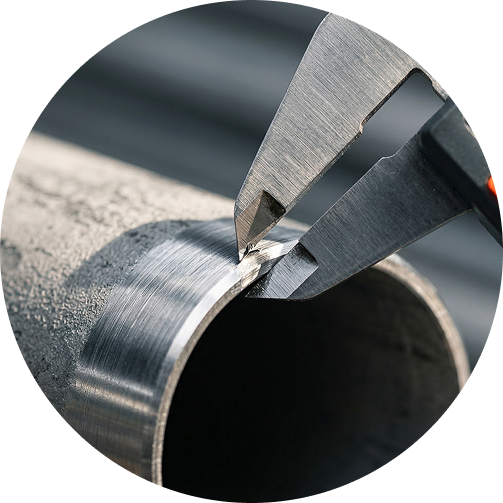
You don’t always need advanced testing to identify issues. A simple, seamless pipe quality check can reveal more than expected.
Basic Seamless Pipe Quality Checks for Stainless Steel Seamless Pipe
These are small things, but skipping them is where many problems begin.
- Surface finish should be consistent
- Thickness should feel uniform
- Pipe should be straight, not slightly bent
- Markings should be clear and traceable
5. Match Seamless Pipe Applications vs Seamless Pipe vs Welded Pipe Use Cases
A lot of decisions go wrong because the focus stays on comparison instead of usage.Instead of asking which is better, look at seamless pipe applications.
Industrial Seamless Pipe Applications (Oil & Gas, Chemical, Power)
Oil & gas pipelines → high pressure
Chemical plants → corrosion resistance
Heat exchangers → temperature stability
Power plants → long-term durability
This is also where seamless pipe vs welded pipe becomes relevant.
In demanding conditions, seamless stainless steel pipe is usually the safer choice. In more stable systems, welded pipes may work just as well. The key is to decide based on application, not assumption.
Read More : What Is the Difference Between Steel Pipes and Tubes?
6. Select a Reliable Seamless Stainless Steel Pipe Supplier and Manufacturer
Even the right pipe can underperform if the supplier isn’t consistent. When selecting a seamless stainless steel pipe supplier, pricing is usually the first comparison point. But over time, consistency matters more.
What to Expect from a Stainless Steel Seamless Pipe Manufacturer
There are many options in the market, especially in India. But not every seamless stainless steel pipe supplier operates with the same level of control. Here’s what you should look for:
- Consistent production quality
- Proper testing and certification
- Clear documentation
- Material traceability
A reliable stainless steel seamless pipe manufacturer or stainless steel pipe manufacturer ensures that what you receive performs the way it should.
Learn More : India’s Leading Steel Pipes & Tubes Supplier & Manufacturer – Supplier Gobbly
7. Consider Long-Term Performance of Seamless Stainless Steel Pipes
At the time of delivery, everything usually checks out. Dimensions match. Surface looks fine. Documentation is complete. But performance is not tested at delivery, it’s tested over time.
Long-Term Performance Factors for Stainless Steel Seamless Pipe
Corrosion resistance
Structural consistency
Performance under pressure
Stability across temperature changes
When you buy seamless stainless steel pipe, you’re not just buying something that works today; you’re choosing how it behaves months or even years later.
Before You Finalize Your Seamless Stainless Steel Pipe Purchase
Before placing the order, it helps to pause for a moment. Ask yourself:
Does the grade match the actual environment?
Are the specifications clearly defined?
Has the basic quality been checked?
Is the supplier reliable beyond pricing?
If the answer to all of these is clear, you’re probably making the right choice.
Final Thoughts on Buying Seamless Stainless Steel Pipes
Most issues with Seamless Stainless Steel Pipes don’t come from major mistakes. They come from small details that didn’t seem important at the time. Nothing dramatic, just decisions that felt “good enough” in the moment. Taking a little extra time before finalizing doesn’t slow things down. In most cases, it prevents bigger problems later.