A Brief Guide About Seamless Stainless Steel Tube
20/ Jan, 2026
Stainless steel is at the very center of modern industry, often in locations that we are not aware of until something goes wrong. It transports process fluids in chemical plants, transports heat efficiently in exchanger applications, enables hygienic fluid flow in pharmaceutical and food processing applications, and manifests itself as clean, long-lasting structures in architectural and fabrication projects. This is why stainless steel pipes and stainless steel tubes are definitely “not just metal products” in the industrial procurement context—they are reliability components. When a project requires predictable performance under pressure, temperature, corrosion, and continuous operation, engineers often short-list the selection to stainless steel seamless pipes & tubes, particularly when the application is critical and long-term life is required.

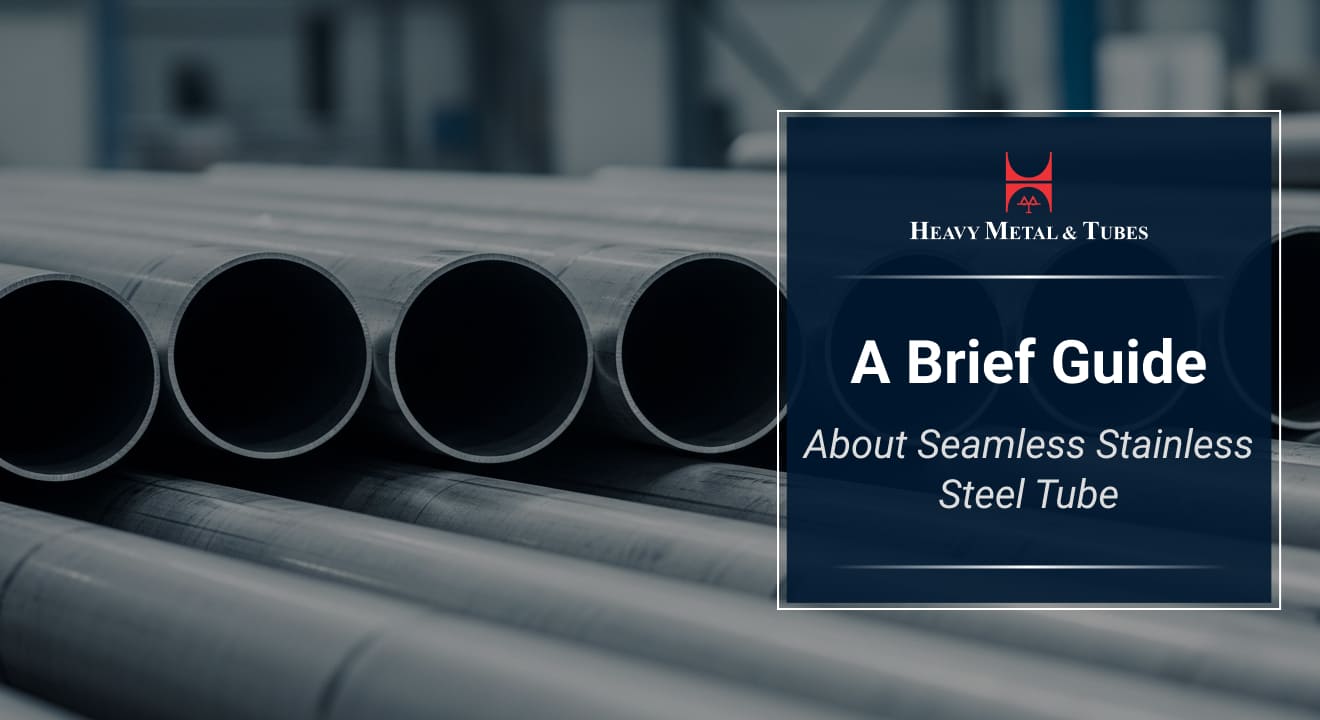
A seamless stainless steel tube is preferred for only one reason: it does not have a weld seam. The absence of a weld seam is more than just a product characteristic. When subjected to actual operating conditions such as pressure variations, temperature variations, vibration, or exposure to harsh chemicals, uniformity becomes a critical factor. A seamless tube provides a homogeneous form around the entire circumference, making it a popular choice in many high-performance and high-safety applications.
What seamless stainless steel tubes are
A seamless tube is manufactured without forming and welding a strip into shape. Instead, seamless production creates a hollow tube from solid starting material through hot working and subsequent sizing operations. In practical terms, that means there is no seam line that behaves differently during forming, bending, pressure loading, or long-term service. For many buyers, especially in oil and gas, boilers, heat exchangers, petrochemicals, and regulated process industries, that structural continuity is the deciding factor when choosing a stainless steel seamless pipe and tube product for demanding duty.
It’s important to note that “seamless” doesn’t automatically mean” “best for everything.” Welded tubes can be excellent and widely used. The key is matching the product type to the service environment, design code, and lifecycle expectations. A good seamless stainless steel tube supplier will ask about operating conditions first, then recommend what actually fits.
See Also: What Is Alloy Steel? Composition, Types, Grades & Applications
Stainless Steel Seamless Pipes & Tubes
In industry, “pipe” and “tube” often get mixed up, but the distinction matters during procurement. Pipes are typically specified for flow systems and are commonly discussed by nominal sizes and schedules. Tubes are typically specified by outside diameter and wall thickness and are widely used where tighter dimensional control is needed, instrumentation lines, heat exchangers, hydraulic systems, and precision fabrication.
Manufacturers like Heavy Metal & Tubes (India) Pvt. Ltd. (HMT) position their offering across both seamless and welded categories, covering stainless steel, carbon steel, and alloy steel. Their site highlights precision-engineered stainless steel pipes for diverse industries and emphasizes global supply readiness and advanced manufacturing/testing capability.
How Seamless Stainless Steel Tubes Are Manufactured
Seamless manufacturing is best understood as a controlled chain rather than a single process. At the hot end, the goal is to convert solid material into a hollow form; after that, the aim is to refine dimensions, finish, and properties until the tube meets specification. HMT’s published manufacturing flow for seamless tubular products shows a typical industry sequence that includes round bar inspection and cutting, heating, piercing, rolling, straightening, heat treatment (when required), cold pilgering/drawing (when required), surface treatment (when required), cutting, physical and chemical testing, hydro testing, NDT such as eddy current or ultrasonic testing, and then marking, packing, and dispatch.
Where many industrial projects become strict is at the “cold finished” stage. Cold working improves dimensional accuracy, surface finish, and consistency—features that matter when the tube must fit precisely, bend predictably, or perform under repeatable pressure and temperature cycles. HMT describes a dedicated cold drawn stainless steel facility with significant covered manufacturing area and equipment capacity, including multiple pilger mills, draw benches, tube mills, and bright annealing capability. This is the kind of capability buyers look for when they need repeatable results from a seamless stainless steel tube manufacturer, especially when large orders must remain consistent batch after batch.
Key Properties of Seamless Stainless Steel Tubes
The popularity of stainless steel tubing comes from a combination of performance traits that work together. Corrosion resistance protects systems from rust, pitting, and chemical attack. Strength and ductility allow tubes to hold pressure and tolerate vibration. Temperature performance supports steam, heat transfer, and hot process lines. Cleanability supports hygienic systems. And for many applications, stainless also offers a clean, modern appearance that makes it ideal for exposed installations.
Read More: What Is the Difference Between Steel Pipes and Tubes?
Seamless construction supports these properties by offering circumferential uniformity. In high-pressure or safety-sensitive systems, that uniformity helps buyers feel more confident about the tube’s long-term behavior, especially where inspection regimes and codes expect robust construction.
Sizes, Dimensions, and Standards
Sizing is more than just “fit.” It involves ensuring that the tube satisfies the pressure design, flow, fabrication, and installation specifications. While purchasing tubes, OD (Outside Diameter) and thickness are the most important factors; in the case of pipes, the schedule becomes important. The length specifications, straightness, ovality, and surface finish may become important based on whether the tubes are to be used for process lines, exchangers, or precision assemblies.
Apart from round sections, there are many applications that require profile tubes for structural and fabrication purposes. This includes stainless steel round tube for fabrication purposes, square tubes and rectangular tubes for frames and supports, Stainless Steel Square and Rectangular Tubes for clean structural designs, and Stainless steel flat tubes for space-efficient designs.
Seamless Stainless Steel Tube vs Welded Tube
The most useful way to think about this comparison is “fit for service.” Seamless is commonly specified when high pressure, high temperature, cyclic loading, or critical reliability is expected. Welded tubing is frequently selected when duty is moderate and cost-efficiency is a priority, especially at larger sizes where welded manufacturing can be economical and widely available.
In practice, many plants use both. A project might use seamless in high-pressure sections and welded in lower-risk, larger-diameter, or non-critical areas. A manufacturer that supplies both types can help buyers balance performance and cost without compromising safety.
Pressure and Temperature Capabilities
Pressure and temperature capability depend on a complete set of variables: grade, OD, wall thickness, applicable code, corrosion allowance, and operating scenario. Seamless is widely preferred in systems where conditions push high pressure and thermal cycling.
For heat exchangers and boilers, performance also depends on forming accuracy, especially with U-bends. HMT specifically notes using the latest “U” bending machine for precision cold bending, with dedicated jigs and fixtures to ensure three-dimensional accuracy for U-bend tubes across heat exchangers, condensers, economizers, and boiler tubes, including cold drawn carbon & alloy steel, and welded. That detail matters because the bend is not cosmetic—U-bend accuracy affects assembly fit-up, leakage risk at tube sheets, and heat transfer efficiency in service.
Applications of Seamless Stainless Steel Tubes
Seamless stainless steel tubing finds application in various sectors where the need is for strength, corrosion resistance, and reliability. Some of the common applications include oil and gas, petrochemical process lines, boilers and pressure vessels, hydraulic and pneumatic systems, chemical industries, solvent plants, and other process plants. The industry coverage of HMT itself lists many of these sectors, including boilers and pressure vessels, hydraulic and pneumatic systems, chemical industries, petroleum and gas, and process plants.
Advantages of Using Seamless Stainless Steel Tubes
The most important advantage is confidence in critical duty. Seamless construction removes seam-related concerns, supports uniform mechanical behavior, and is widely chosen where failure is costly or dangerous. Over time, seamless tubes can reduce downtime risk, maintenance burden, and replacement cycles—when the correct grade and thickness are chosen and when inspection/testing is aligned with the application.
How to Select the Right Seamless Stainless Steel Tube
Selection becomes straightforward when you focus on service reality. Start with the media: what flows inside, and how aggressive is it? Define operating pressure and temperature, including fluctuations. Understand the external environment and whether it increases corrosion risk. Then decide whether you need tube precision (OD/WT control) or pipe sizing (schedule-based flow systems). If the tube will be bent—especially into U-shapes—confirm bending capability and post-bend requirements early. If the tube is structural, determine whether you need round or shaped sections such as square, rectangular, or flat tubes. When these inputs are clear, you can work with your seamless stainless steel tube supplier to finalize grade, standard, inspection scope, and packaging expectations.
Quality Testing and Inspection Methods
Industrial buyers do not depend on promises; they depend on consistency, verification, and trust developed over time. At Heavy Metal & Tubes, quality is not considered a final verification process but a continuous process that passes through every stage of production. Right from the time raw materials are put into production to the final product ready to be shipped, every tube is carefully tracked to ensure reliable performance under practical conditions.
Each product is subjected to a rigorous inspection process with the aim of ascertaining strength, accuracy, and quality. This is done through pressure testing, complex material testing, and minute visual inspections. The multi-level inspection process is effective in ascertaining the slightest deviations, thus allowing only products that meet in-house quality standards to reach the customer.
It is the quality process at HMT that truly makes it different from the rest. Instead of testing in isolation, the company has incorporated quality control processes throughout the cold working, heat treatment, finishing, and final inspection phases.
Storage, Handling, and Installation Best Practices
Even the right tube can be compromised by poor handling. Stainless products should be stored clean and dry, protected from impacts and contamination, and handled in a way that avoids damage during loading and unloading. Packaging is part of performance too. HMT’s own packaging-focused blog emphasizes that proper packaging helps prevent transit damage, supports compliance expectations, and aligns with domestic and international shipping requirements—because logistics can introduce dents, scratches, and deformation that permanently affect usability. For installation, careful practices—clean ends, correct joining procedures, and preventing contamination—help preserve corrosion resistance and extend service life.
Future Trends in Seamless Stainless Steel Tubing
As projects become more regulated and global, buyers increasingly look for three things: tighter tolerances, stronger documentation and traceability, and more application-specific solutions (especially for exchangers and boilers where forming quality is critical). The market also continues to move toward stronger quality, environmental, and safety management systems—making ISO and pressure-equipment approvals a more standard expectation rather than an exception.
Conclusion
Seamless stainless steel tubing is not a “premium choice” for the sake of being one—it is an engineering choice that makes sense in high-pressure, high-temperature, corrosion-resistant, or safety-related applications. The best results are achieved by matching the right grade, right size, right standard, and right scope of testing with the right manufacturer. Whether your project requires process stainless steel pipes, precision Stainless steel tubes, shaped sections such as Stainless Steel Square and Rectangular Tubes, or heat exchanger U-bends, seamless is definitely one of the best starting points for reliability in a modern industrial setup.