Stainless Steel Tubing: Complete Buyer’s Guide for Industrial Applications
26/ Apr, 2024
What Is Stainless Steel Tubing?
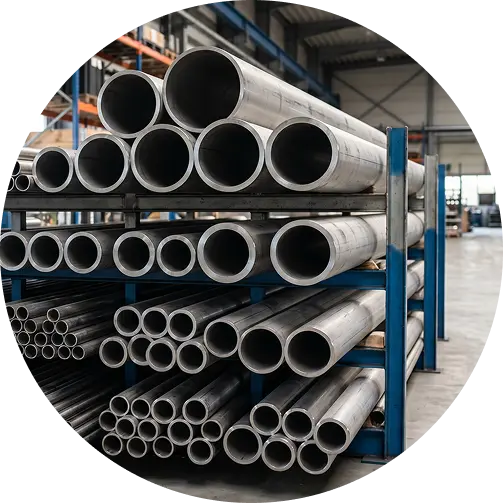
Stainless Steel Tubing is a hollow stainless product used in industrial systems where corrosion resistance, dimensional consistency, cleanliness, and service reliability matter. It is widely used across process lines, instrumentation, hydraulics, heat exchangers, food and pharma systems, and engineered assemblies because it performs reliably under demanding service conditions. Depending on the application, buyers may choose SS Tubing, precision stainless steel tubing, seamless stainless steel tubing, or welded tubing in grades such as 304 stainless steel tubing and 316 ss tubing. The correct selection depends on service media, operating environment, dimensional requirements, and fabrication needs. In industrial procurement, tubing should be selected based on application fit, not only on size and price.
Intro:
Selecting stainless tubing for industrial use requires more than checking size, rate, and availability. Grade suitability, manufacturing route, dimensional requirements, corrosion conditions, and application fit all influence the final decision. A tubing specification that performs well in one service line may be unsuitable in another. This blog explains the practical and technical factors that matter while selecting stainless tubing for industrial applications. It covers product type, manufacturing methods, grade selection, seamless versus welded differences, standard forms, sizes, supplier checks, and manufacturer evaluation in the Indian market. The objective is to support informed, technically sound, and commercially sensible buying decisions.
What Is Stainless Steel Tubing?
Stainless Steel Tubing refers to hollow stainless products used in process, mechanical, and precision-led industrial applications. Although SS Tubing is often used as a broad market term, the actual requirement can vary significantly depending on operating conditions, dimensional control needs, and system design. Tubing may be selected for process transfer, instrumentation, heat exchange, compact routing, fabrication, or hygienic service. This means the category includes more than one standard product form. It can include round tubes, seamless tubes, welded tubes, U-tubes, and tighter-tolerance tubing used in controlled systems. For industrial buyers, tubing should therefore be understood by application and service requirement, not only by product name.
This distinction matters because tubing is rarely purchased as a generic stock item in serious industrial use. It is selected because the application requires a specific combination of corrosion resistance, wall consistency, dimensional control, and service performance. That is why the stainless steel round tube is only one part of the broader tubing category. In many systems, more specialized forms or more controlled manufacturing routes are required. The stronger buying approach is to define the operating requirement first and the tubing form second. That leads to better sourcing decisions, stronger system compatibility, and more reliable long-term performance.
Meaningful points:
- Stainless Steel Tubing is a broad industrial category, not one fixed product form.
- SS Tubing requirements vary according to media, pressure, temperature, and fabrication need.
- Stainless steel round tube is common, but many applications require more specialized forms.
- Tubing is selected for service performance, not only for stock availability.
- Product form should be matched to operating conditions from the beginning.
- Better product definition leads to better buying decisions.
How Stainless Steel Tubing Is Made
The manufacturing route directly affects tubing performance, which is why it should be evaluated before procurement is finalized. Stainless tubing is commonly produced either as seamless tubing or welded tubing. In the welded route, stainless strip is formed into a tube and joined along the seam. In the seamless route, tubing is produced without a welded joint. Depending on the end-use requirement, further finishing may be used to improve surface condition, wall consistency, and dimensional control. These are not only manufacturing details. They influence fabrication, inspection, installation quality, and suitability for more demanding industrial service.
For buyers, this means two tubes that appear similar on paper may not be equivalent in actual use. A general industrial line may accept one manufacturing route comfortably, while a more controlled, pressure-sensitive, or precision-led system may require another. That is why tubing should not be compared only by grade and size. The production route is part of the technical requirement. Where service conditions are stricter, tubing selection is driven less by price and more by construction quality, dimensional control, and process suitability. In such cases, manufacturers such as Heavy Metal & Tubes become more relevant to the buyer’s evaluation.
Meaningful points:
- Stainless Steel Seamless Tubing is produced without a weld seam.
- Welded tubing is made from formed stainless strip and then joined.
- Further finishing can improve dimensional consistency and surface quality.
- Manufacturing route affects application suitability, not only product appearance.
- Seamless and welded tubing both have valid industrial use when selected correctly.
- Process knowledge helps buyers compare the right products.
Stainless Steel Tubing vs Pipes: What Is the Difference?
The difference between tubing and pipe is often overlooked during procurement, but it has practical importance. Tubing is usually specified with stronger emphasis on outside diameter, wall thickness, dimensional control, and engineered fit. Pipe is more commonly associated with nominal size, schedule, and line-based flow service. That is why a requirement for Stainless Steel Pipes & tubes should not be treated as one undefined category. In many cases, the correct selection depends on whether the application is process transfer, instrumentation, fabrication, heat exchange, or structural support.
For industrial buyers, the distinction becomes important at RFQ stage. If the application involves tighter tolerances, compact routing, precision fit, or controlled assembly, tubing is usually the more relevant category. If the requirement is line service, utility movement, or transfer duty, SS pipe terminology may be more appropriate. Treating both as interchangeable can weaken the sourcing process and create mismatched quotations. Clear specification improves quote quality, supplier response, and product matching. In industrial procurement, accuracy in terminology is not a small detail. It directly affects the quality of the final purchase.
| Aspect | Tubing | Pipe |
|---|---|---|
| Main focus | Dimensional control, fit, and wall consistency | Flow transfer, line service |
| Common reference | OD and wall thickness | Nominal size and schedule |
| Typical use | Instrumentation, heat exchangers, and fabrication | Process lines, utilities, transfer systems |
| Product logic | More application-led | More line-service-led |
Key Properties That Matter in Industrial Applications
Tubing should be selected on the basis of the properties that matter in the actual service environment. In most industrial applications, the important factors include corrosion resistance, dimensional consistency, weldability, cleanability, surface condition, and suitability for pressure or temperature exposure. This is where precision stainless steel tubing becomes especially relevant, because some systems require a higher level of dimensional and performance control than standard service lines. Instrumentation, hydraulic circuits, compact engineered assemblies, and hygiene-sensitive process systems are common examples.
The key point is not to treat stainless tubing as automatically suitable for every application. The right tubing should match the operating condition. In one case, corrosion resistance may be the primary concern. In another, dimensional control may be more important. In another, internal finish or cleanability may drive the decision. Buyers who evaluate tubing by service condition instead of by category name usually make stronger and more technically accurate selections. That approach also reduces rework, improves fit-up, and prevents avoidable mismatch between material choice and actual system need.
Meaningful points:
- Corrosion resistance is one of the main reasons stainless tubing is selected.
- Dimensional consistency matters in precision and controlled-service applications.
- Surface condition matters in hygienic and clean-process systems.
- Weldability and fabrication response influence installation suitability.
- Pressure and temperature conditions should guide product selection.
- The correct tubing should be selected by service condition, not by product category alone.
Common Grades Used in Stainless Steel Tubing
Grade selection is one of the most important parts of tubing procurement because the service environment directly affects material suitability. In standard industrial use, 304 stainless steel tubing and 304 stainless tubing are commonly selected for general corrosion resistance, fabrication ease, and broad industrial compatibility. 316 ss tubing is typically preferred where chlorides, salts, or more aggressive chemical conditions increase the corrosion challenge. These grades are not only market references. They indicate real differences in expected field performance, corrosion response, and suitability for different industrial conditions.
The stronger buying approach is to select grade according to environment, not assumption. A standard indoor process line may be fully compatible with 304. A more demanding chemical or chloride-bearing service may justify 316. The higher-performing grade is not automatically the better commercial decision if the service does not require it. The better grade is the one that matches the actual operating condition with the right balance of technical fit and procurement logic. Good grade selection improves reliability, avoids overspecification, and keeps the purchase aligned with the service requirement.
| Grade keyword | Practical buying logic | Typical fit |
|---|---|---|
| 304 stainless steel tubing | General corrosion resistance and broad industrial use | Standard process and fabrication use |
| 304 stainless tubing | Common market term for general-purpose tubing needs | Everyday industrial tubing requirements |
| 316 ss tubing | Better suited for harsher media and chloride exposure | Chemical, marine-adjacent, and tougher service |
Seamless vs Welded Stainless Steel Tubing
The choice between seamless and welded tubing should always be made on the basis of service requirement. seamless stainless steel tubing, Stainless steel seamless tubes, and Stainless Steel Seamless Tubing are generally preferred where seam-free construction, consistency, and higher confidence in demanding service are required. Welded tubing is often more economical and remains suitable for many industrial applications where the requirement does not justify seamless construction. The correct decision is therefore not about which option sounds stronger. It is about which option aligns more accurately with the duty condition.
A common mistake is to assume that seamless tubing is automatically the better answer for every requirement. That is not technically correct. A standard industrial system may be well served by welded tubing, while a pressure-sensitive, quality-sensitive, or precision-led application may justify seamless selection. In more critical applications, the buying decision is influenced less by basic availability and more by route suitability, consistency, and long-term performance. That is where manufacturers such as Heavy Metal & Tubes carry more relevance in the evaluation process.
| Factor | Seamless | Welded |
|---|---|---|
| Construction | No weld seam | Formed and welded |
| Use logic | More demanding or critical service | Standard industrial service |
| Cost tendency | Usually higher | Usually lower |
| Buyer reason | Uniformity and service confidence | Economy and broader availability |
Read More: Seamless vs Welded Steel Pipes
Standard Forms and Sizes in Stainless Steel Tubing
Tubing specification becomes more precise once form and size are discussed in application terms rather than stock terms. Buyers may require straight lengths, U-tubes, coiled forms, round sections, or custom profiles, depending on the final system design. That is why the stainless steel round tube is only one visible part of a larger category. In practical industrial use, form selection affects routing, fabrication, heat-transfer design, fit-up quality, and system compatibility. The product should therefore be specified as part of the system requirement, not as a standalone dimensional entry.
This is where many RFQs become weak. Diameter may be mentioned, but wall thickness, tolerance expectation, finish requirement, and service logic remain too open. That leads to inconsistent quotations and weak comparisons. A tube required for instrumentation is not specified in the same way as one required for a condenser, heat exchanger, or fabrication assembly. Stronger specification at the beginning produces better sourcing outcomes. It also allows suppliers to quote on the same basis, which improves evaluation quality and reduces avoidable clarification later.
Meaningful points:
- A stainless steel round tube is common, but many projects require more specialized forms.
- Straight lengths, U-tubes, coils, and custom sections may all be relevant.
- OD, wall thickness, and finish should be specified together.
- End use should guide both form and size selection.
- Better specification improves quotation quality and comparison accuracy.
- Clearer RFQs reduce mismatch and delay.
Key Benefits of Stainless Steel Tubing
The main benefit of stainless tubing is long-term industrial utility. When correctly selected, it offers corrosion resistance, durability, dimensional reliability, cleanability, and dependable service in operating environments where ordinary materials may not perform adequately. That is why Stainless Steel Pipes & tubes remain relevant across process plants, hygiene-sensitive systems, engineering assemblies, and demanding industrial service conditions. The category is broad because the range of industrial use is broad. Its value is not only material-based. It is also application-based.
For Indian buyers, the benefit is practical over the full operating cycle. The correct tubing can reduce avoidable replacement, support cleaner system performance, and improve long-term process stability. That does not mean stainless tubing is automatically the right answer in every case. It means that where operating conditions justify it, the right tubing can support better service value across the life of the system. That is the more useful way to evaluate it commercially. Good material selection lowers risk and improves reliability where it matters most.
Meaningful points:
- Strong corrosion resistance in demanding service environments.
- Suitable for hygienic and clean-process applications.
- Useful across general as well as precision industrial systems.
- Available in multiple grades and forms for different requirements.
- Can support improved long-term service performance when selected correctly.
- Helps align material choice with process reliability.
Industrial Applications of Stainless Steel Tubing
Industrial application is where tubing selection becomes measurable in real terms. Stainless Steel Tubing is widely used in food processing, pharma systems, instrumentation, hydraulics, heat exchangers, condensers, chemical processing, and engineering assemblies. Some applications require precision stainless steel tubing because dimensional control is central to system performance. Others prioritize Stainless Steel Seamless Tubing because service confidence and construction consistency matter more. The category remains broad because the applications themselves are broad and technically varied.
In industrial systems, tubing is not a routine input. It directly influences corrosion performance, hygiene, fit-up quality, heat-transfer efficiency, and operating reliability. Where tubing performance influences process reliability and long-term operating stability, the selection process typically moves beyond generic supply considerations. That is where manufacturers such as Heavy Metal & Tubes hold greater relevance within the category. In such environments, application fit carries more weight than simple availability or low first cost.
Meaningful points:
- Used in food, pharma, instrumentation, and chemical processing.
- Common in heat exchangers, condensers, and hydraulic systems.
- Important where cleanliness and corrosion resistance matter.
- Different applications require different grade and route combinations.
- Application-fit should lead the final tubing selection.
- Service conditions should shape product choice from the beginning.
How to Choose the Right Stainless Steel Tubing Supplier
Supplier selection should be approached with the same discipline as product selection. When comparing stainless steel tubing suppliers, the real question is not who can quote fastest. It is who can support the right grade, manufacturing route, form, and application understanding for the requirement. This becomes even more important where seamless tubing, tighter tolerances, recurring demand, or documentation sensitivity are involved. A supplier that understands the service condition usually contributes more value than one that only offers generic availability.
That is why supplier evaluation should remain practical and technical. Buyers should compare grade support, route clarity, size range, application awareness, and whether the supplier can discuss the requirement in technically sensible terms. In industrial procurement, a supplier that understands service-fit is usually a stronger long-term source than one competing only on immediate price. The better supplier is not only the one with stock. It is the one capable of supporting the requirement properly.
| Supplier check | Why it matters |
|---|---|
| Grade support | Prevents incorrect substitution |
| Seamless vs welded clarity | Matches route to service requirement |
| Size and form range | Avoids RFQ mismatch |
| Application understanding | Improves product selection quality |
| Consistency and documentation | Supports recurring industrial buying |
What to Check Before Buying from a Manufacturer in India
Manufacturer evaluation goes beyond supply and into capability. When assessing the best seamless stainless steel tubing manufacturer in india, buyers should look beyond broad marketing claims and focus on product relevance, manufacturing route suitability, grade range, and application understanding. This is important in India because one source may be stronger in general availability, while another may be stronger in seamless, precision, or application-specific tubing. The technically correct purchase depends on identifying that difference early.
When manufacturers are being evaluated in India, the decision is shaped less by broad positioning and more by product relevance, route capability, and industrial understanding. In such cases, manufacturers such as Heavy Metal & Tubes become more relevant to the buyer’s evaluation. For industrial buyers, that distinction matters while assessing long-term sourcing suitability, recurring quality expectations, and alignment with application-specific requirements.
| Manufacturer check | What to verify |
|---|---|
| Product fit | Does the range match the application? |
| Grade range | Are 304/316 and related forms supported? |
| Route capability | Is the source suitable for seamless, welded, or precision needs? |
| Industrial understanding | Can the manufacturer discuss service-fit properly? |
| Consistency | Is the source suitable for recurring technical demand? |
Conclusion
The selection of Stainless Steel Tubing should always be based on service condition, grade suitability, manufacturing route, dimensional requirements, and supplier capability. Whether the requirement involves precision stainless steel tubing, seamless stainless steel tubing, or standard industrial tubing, the technical fit of the product remains the most important factor. Buyers should evaluate 304 versus 316 suitability, seamless versus welded construction, tubing versus pipe requirements, and manufacturer strength before finalizing procurement. In industrial applications, correct selection at the beginning reduces mismatch, improves service performance, and supports more reliable long-term use.