Carbon Steel Seamless Pipes: Properties, Grades, and Uses Explained
17/ Sep, 2026
Carbon steel seamless pipes are employed in many systems within the industry demanding great strength, high-pressure working ability, and good, reliable operation. Such a seamless pipe, lacking a longitudinal seam, can perform best under a very harsh working environment. They are utilized primarily in oil and gas fields, refineries, power plants, boilers, chemical plants, and in general engineering. Cold drawn carbon & alloy steel products can also be used where tighter dimensional tolerances and specific mechanical properties are required. But choosing the right pipe doesn’t just mean carbon steel; it comes in different grades, dimensions, wall thicknesses, temperatures, pressures, how it's made, how it's tested, and which standards it is made to fit. By knowing the above factors, engineers, procurement specialists, and project managers have the knowledge base to make a smart choice in the selection of the piping material, ensuring the service life of the piping system for the years to come.
What Are Carbon Steel Seamless Pipes?
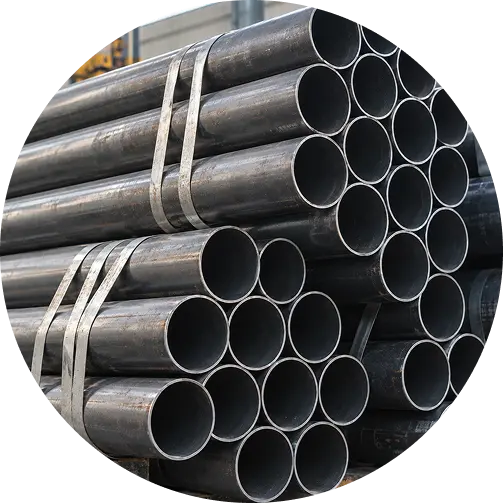
A carbon steel seamless pipe is a tubular product manufactured from a solid steel billet rather than from a flat strip or plate that is subsequently welded. In manufacturing, the billet is heated up and pierced to form a hollow shell. Rolling, sizing, drawing, or other finishing processes are then performed to attain the necessary size and properties. The role of carbon steel seamless pipes is to provide reliable fluid and gas transportation in applications where strength, pressure resistance, and durability are important.
The absence of a longitudinal weld is one of the defining characteristics of a seamless carbon steel pipe. Rather than an additional weld along its length, the structure is one solid piece of material around its girth. Thus, seamless pipes are suitable for pressure/high-temperature service and are used where subjected to mechanical stress and harsh operating conditions.
Carbon steels are primarily composed of iron and carbon, with smaller amounts of manganese, silicon, sulfur, and phosphorus. Their properties, including strength, hardness, ductility, and toughness, depend on their composition, manufacturing process, and heat treatment. When selecting between different pipe materials, understanding the difference between stainless steel and carbon steel pipes can help engineers evaluate factors such as corrosion resistance, strength, cost, and application requirements.
How Are Carbon Steel Seamless Pipes Manufactured?
The manufacturing processes affect the dimensions, structural integrity, surface characteristics, and mechanical properties of the pipe or manufactured component. The actual method of production will depend on the required attributes of the pipe but mainly involves the following stages.
1. Billet Selection and Preparation: The forming begins by selecting a round steel billet of an appropriate size, whose chemical composition is as required. The raw material should be chosen in accordance with applicable product specifications and made ready for the forming operation.
2. Heating: The billet is first heated to an optimum temperature before piercing. Correct heating facilitates the forming of the material and contributes towards sustained production levels and facilitates consistent formation of the required condition for piercing and uniform hollow production.
3. Piercing: After being heated, the billet moves on to undergo a piercing operation. This process effectively turns the solid section into a hollow shell. This is a vital step that creates a differentiation between manufactured tubing and that which is welded pipe.
4. Rolling and Sizing: Rolling & sizing operations will be performed on the hollow shell to obtain the correct OD and wall thickness. Cold drawing or finishing operations will then be used if needed and on certain applications to meet closer size tolerances.
5. Heat Treatment: Heat treatment may be necessary to achieve mechanical properties dependent upon the grade and specification. The specific treatment selected will be dependent on whichever material standard is applied along with product needs.
6. Finishing and Inspection: Once the pipe is formed and heat-treated, further processes such as straightening, cutting, end facing, end preparation, coating/treatment, and examination of dimensions are conducted. Testing then takes place in compliance with the applicable standard and with client specifications.
Key Properties of Carbon Steel Seamless Pipes
Grade, size, manufacturing condition, and environment also influence how well a seamless pipe performs. There are many qualities that make carbon steel seamless products valuable and capable in rigorous industrial environments.
High Mechanical Strength
There are occasions when useful quantities of both tensile and yield strength can be obtained from carbon steel. It is therefore adequate for systems involving mechanical and functional stresses.
Pressure-Handling Capability
For those applications where constant pipe wall integrity is needed, continuous construction of seamless pipe has some benefits. Pressure cannot be considered determined by seamlessness; grade, wall, dimensions, temp, code, and application conditions cannot be neglected.
Good Toughness and Ductility
Well-chosen carbon steel grades will deliver acceptable combinations of both strength and ductility, which is often necessary if pipes will be subjected to physical stresses or require working on site.
Temperature Performance
Certain carbon steel specifications are designed for elevated-temperature service. The selected grade must therefore correspond to the expected operating and design temperatures. The applicable material standard specifies the required mechanical properties and performance limits at the intended service temperature.
Fabrication Compatibility
Processing using conventional industrial fabrication techniques would be applicable to carbon steel as a whole. These processes can involve cutting, bending, flanging, and welding procedures as appropriate to the grade and the relevant specification.
Consistent Pipe Construction
In numerous pressure and process applications, the seamless product might be chosen over the manufactured product for the simple fact that, since the seamless pipe is manufactured from a solid billet and is not welded along its entire length, the seamless pipe would not have a welded seam running through it.
Carbon Steel Seamless Pipe Grades
Knowledge about different carbon steel pipe grades is very important because the carbon steel pipe grade varies based on varying mechanical, temperature, and service condition requirements. The correct selection to use will depend upon the application, operating circumstances, manufacturing requirements, and relevant specification.
| Grade / Standard | Key Features | Typical Applications | Temperature Suitability |
|---|---|---|---|
| ASTM A106 Gr. A/B/C | Seamless carbon steel for high-temperature service | Process piping, refineries, power plants | Elevated-temperature service |
| ASTM A53 | General-purpose seamless and welded steel pipe | Water, air, steam, mechanical and structural applications | General service; application dependent |
| ASTM A179 | Seamless cold-drawn low-carbon steel tubing | Heat exchangers and condensers | Heat-transfer applications |
| ASTM A192 | Seamless carbon steel boiler tubes | High-pressure boilers | High-temperature boiler service |
| ASTM A210 | Seamless medium-carbon steel boiler and superheater tubes | Boilers and superheaters | Elevated-temperature service |
These designations are not the same just because all are steel alloys of the carbon grade. Each specification has its own definition, which relates to chemical compositions, mechanical properties, and other requirements associated with how the steel was made.
As an example, ASTM A106 is a seamless carbon steel pipe for service at high temperatures. The proper grade should always be verified with the entire project specification and operating parameters.
Standards & Specifications for Seamless Carbon Steel Pipes
The specifications set forth requirements concerning material chemistry, manufactured finish, mechanical characteristics, tests to be performed, and the acceptance criteria. Reviewing the applicable carbon steel pipe standards is therefore an important part of pipe selection and procurement.
Additionally, you should not confuse a material specification and a dimensional standard. A material specification dictates conditions on the steel product, and a dimensional standard provides criteria on standardized pipe sizes, wall thicknesses, and dimensions.
The required carbon steel pipe specifications should clearly identify important details such as:
- Material grade and specification
- Nominal pipe size or outside diameter
- Wall thickness or schedule
- Pipe length
- Heat treatment requirements
- End preparation
- Dimensional tolerances
- Testing and inspection requirements
- Certification requirements
- Applicable standard and edition
- Surface and finish requirements, where applicable
For buyers and engineers, understanding steel standards for seamless pipes can make it easier to distinguish between material specifications, dimensional requirements, testing provisions, and other project requirements.
Applications of Carbon Steel Seamless Pipes Across Industries
The combination of strength, versatility, and availability of different grades makes seamless carbon steel pipe suitable for a broad range of industrial applications.
Oil and Gas
Carbon steel seamless pipe is also utilized in numerous processes and utility services of oil & gas plants. As per the service type, it may be selected for a system containing hydrocarbons, water, steam, or compatible fluids.
Selection of material for an oil & gas plant must always consider pressure, temperature, fluid properties, corrosion environment, and applicable project specifications.
Refineries and Petrochemical Plants
Process fluids, hydrocarbons, streams, and utilities are transported through a huge network of piping systems in refineries. Seamless grades can be used where the desired pressures and temperature values fall within the limits of the selected material. Selection must be in accordance with the real process conditions rather than arbitrary use of commonly used grades.
Power Generation
The distribution of steam, water, and other process fluids in power plants depends on piping systems, where, for certain components of power plants, steel grades suitable for conditions of temperature and pressure are used in a given facility.
Special attention must be given to the grades, wall thickness, and design conditions for the system piping of the boiler.
Boilers and Heat Exchangers
The application of carbon steel tubes relies on the selection of a particular carbon steel tube specification, as in the case of boilers, superheaters, condensers, and heat exchangers.
These applications call for the close assessment of heat transfer conditions, pressure, temperature, and the requirements on materials of construction.
Chemical and Process Industries
Carbon steel pipe can be used for compatible process fluid service as well as utility service.
Carbon steel is not compatible in all chemical environments; therefore, fluid compatibility and corrosive conditions should be checked before selecting a material.
General Engineering
Beyond process industries, seamless carbon steel pipes are also used in machinery and construction elements, fabrication processes, engineering systems, and other general applications.
They are suitable due to their mechanical and seamless qualities.
Benefits of Using Carbon Steel Seamless Pipes
The benefits of seamless carbon steel pipes come from the combination of material properties, continuous construction, and availability across different grades and specifications. These characteristics make them suitable for a wide range of demanding industrial applications where dependable pipe performance is required.
Continuous Pipe Structure: A seamless pipe has no longitudinal welded seam, providing consistent wall integrity and uniform construction.
Good Mechanical Strength: Carbon steel offers good mechanical strength for applications exposed to pressure and mechanical loading.
Multiple Grade Options: Different carbon steel grades allow selection based on temperature, pressure, mechanical properties, fabrication requirements, and service conditions.
Suitable for Demanding Service: Specific grades can be selected for elevated-temperature and other demanding industrial applications.
Established Fabrication Practices: Carbon steel supports established fabrication practices such as cutting, welding, and bending when permitted by the relevant specifications.
Broad Industrial Applicability: Carbon steel seamless pipes are used across oil & gas, refineries, power generation, boilers, chemical processing, and general engineering.
How to Select the Right Carbon Steel Seamless Pipe for Your Project?
The initial considerations during pipe selection should focus on operating conditions and project needs rather than primarily on available products. Parameters such as pressure, temperature, the nature of the fluids handled, and dimensions, together with the relevant codes and standards that govern the pipe, must be investigated and prior evaluation performed.
- Understand the Service Conditions : First, the fluid or medium that is being transferred must be defined. Likewise, operating pressure, design pressure, operating temperature, design temperature, flow conditions, and environmental influences must all be defined.
- Select the Appropriate Grade: Compare what the necessary mechanical and temperature characteristics are versus what grades of material are available. All selected material must meet project requirements and design conditions under the applicable specification.
- Determine Pipe Dimensions: Give nominal size or outer diameter, wall thickness, schedule, and any length specifications. Define the allowable dimension tolerances. This affects design for pressure, fluid characteristics, and fit, i.e., installation.
- Confirm the Applicable Standard: You shall ascertain if the work requires an ASTM, ASME, API, EN, DIN, or otherwise applicable standard. The applicable standard, including the applicable edition, shall be noted in purchase orders.
- Review Testing Requirements: Requirements of the tests shall be established before purchasing material. Depending on the application, the specification could dictate chemical analysis, tensile test, hardness test, hydrostatic test, ultrasonic test, eddy current test, etc.
- Consider Fabrication Requirements: Verify, for welded, bent, flanged, or other fabrication of pipe, that the chosen grade and condition are suitable for the required fabrication. For important fabrication steps, procedures should be determined.
- Check Documentation and Traceability: For critical industrial projects review, material test certificates, heat numbers, inspection data, reports, dimensions, and other relevant information. Good traceability will verify quality from sourcing through to installation.
Why Choose Heavy Metal for Carbon Steel Seamless Pipes?
Buyers consider not only the availability of products and prices when choosing a carbon steel seamless pipe manufacturer. Factors influencing suitability include manufacturing capacity, process control, dimensional accuracy, test capabilities, material range, and capability to customize for customer needs.
Heavy Metal & Tubes is equipped to operate along the lines of various standard international/industry-specific codes and standards relevant to carbon & alloy steel material. This is often relevant to projects requiring grade, dimensions, tests, inspections, and documentation according to an available purchase specification.
When considering the capabilities of a manufacturer, the principal concern must remain. Can the manufacturer provide the material grade, dimensions, QC, tests & documentation for the intended serviceability consistently?
Conclusion
Carbon steel seamless pipes remain an essential component in industrial piping system owing to its strength; monolithic structure, application diversity; range of grades and specifications available. Nevertheless seamless construction does not always alone render the suitability of a piping component for a specific application but its grade, dimension, wall thickness, operating condition (pressure & temperature), fabrication need & testing required as well as relevant standards need be evaluated together.
Knowing about the carbon steel pipe grades, specifications, and industry practices will help engineers as well as procurement teams to arrive at a correct decision. Appropriately matching the pipe to the intended service and procuring from a competent manufacturer would achieve appropriate relation between performance, quality, standard and reliability.