Cold Drawn Carbon Steel Tubes: Features, Grades & Common Uses
21/ Sep, 2026
Cold drawn carbon steel tubes are most commonly used where the application requires precise dimensional control, specific surface finish, and mechanical properties. Cold finished tubes offer a further stage of mechanical conditioning and dimensional control compared to normal hot-finished tubes. They are suitable for use in engineering, automotive, hydraulic, machinery, power generation, and industrial equipment applications.
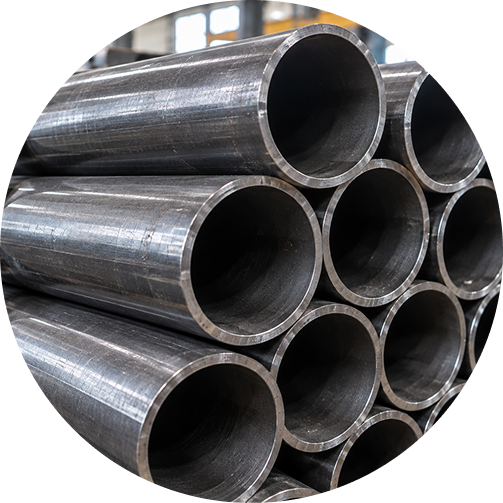
However, choosing the right tube requires knowing much more than it is a carbon steel material. Each quality, grade, size, wall thickness, product condition, test requirements and standard will influence the product compatibility for application. Cold drawn carbon alloy steel tubes may also be selected where tighter dimensional tolerances and specific mechanical properties are required. Through the understanding of tube manufacturing process, classification, major characteristics, application and specification, engineers and purchasing professionals can identify the tubes to match the demand of technical and performance.
What Are Cold Drawn Carbon Steel Tubes?
Cold-drawn carbon steel tubes are a type of tube that is, for the most part, seamless tubes that have been cold drawn after being initially manufactured. Cold drawing is a manufacturing operation in which a tube is pulled through a die to reduce the diameter or wall thickness and attain tighter tolerances on dimensions. It can also affect the surface roughness of the finished tube as well as the mechanical properties.
Because the material is work-hardened under conditions below the typical hot working temperature range, this can produce material with characteristics useful in demanding applications.
Cold drawing is a manufacturing process, not a grade of material, so there are many grades of carbon steel tubing that can be manufactured as cold drawn products. They are valuable when tight dimensional control and superior surface finishes are needed and can be produced to various sizes, wall thicknesses, lengths, and delivery conditions.
It is also important to distinguish carbon steel tubes from alloy steel tubes. It is important to have a clear understanding of what alloy steel is, the various elements contained, and how alloying will impact a range of properties from strength and toughness through to temperature capabilities.
How Are Cold Drawn Carbon Steel Tubes Manufactured?
The cold-drawn carbon steel tube manufacturing process is carefully controlled. It can be divided into the following several steps, each of which affects the dimensional quality, surface quality, mechanical properties, and final usability of the steel tube.
1. Seamless Tube Production
Typically, the production of a suitable seamless hollow tube first commences. The solid billet is heated and pierced in the course of some manufacturing routes. This results in a hollow shell that is subsequently sized and finished.
2. Surface Preparation
Prior to cold drawing, the surface of the tube may need to be conditioned in order to minimize the sliding friction that occurs between the tube and the tooling. Effective surface condition and lubrication are critical for a controlled drawing process.
3. Cold Drawing
The prepared tube is then drawn through a die, decreasing the outside diameter and/or wall thickness of the tube. Depending on the particular dimensions and drawing procedure required, a mandrel may be used. This process of controlled reduction can enhance the dimensional accuracy of the tube and give a better finish than the original tube.
4. Intermediate Heat Treatment
Several drawing passes might be necessary when significant reductions are actually needed. Intermediate heat treatment can be employed between these drawing passes to regain required properties of the material.
5. Straightening and Finishing
The tubes are then straightened, cut to length, finished at the ends, and undergo other processes as specified by the customer after the drawing process. The finished tube is examined for conformity to drawing dimensions and quality.
Key Features and Advantages of Cold Drawn Carbon Steel Tubes
The advantages of cold drawing make these tubes ideal for any precision-related applications. These advantages really come into play when you need to control for length, surface, and predictable mechanical properties of the material.
Tighter Dimensional Control: When manufacturing the tube this way, it allows greater dimensional tolerances than can be obtained in the initial hot-finished tube. This may be beneficial where components require uniform dimensions for assembly or machining.
Improved Surface Finish: The action of drawing can also give a smoother, more controlled finish to the outside of the tube. This can be advantageous where the surface condition might influence fitting, movement, appearance, or machining of the tube.
Consistent Wall Thickness: Controlled drawing can help achieve the specified wall dimensions across the tube. Uniformity is particularly important when tubes are incorporated into engineered components or systems.
Enhanced Mechanical Properties: Cold working hardening capabilities can be achieved for the material, resulting in enhanced properties, such as strength or hardness, as appropriate for the specific material grade and final delivery condition. This conforms to specifications!
Precision for Engineering Applications: The accurate size and smooth surface appearance also mean that the cold-drawn tube is suitable for products that demand tight dimensional control. This is beneficial in maintaining uniform assembly and machining tolerances.
Flexible Product Configuration: Cold-drawn tubes can be manufactured in a variety of outside diameters, wall thicknesses, lengths, grades, and delivery conditions, giving even greater scope for matching the product to the exact requirements of a given project.
Grades of Cold Drawn Carbon Steel Tubes
Chemical composition, mechanical properties, and the service and standard should be taken into account when choosing the cold drawn steel tube grades. Common carbon steel specifications can define grades for various general mechanical properties, pressure service, heat exchange equipment, etc.
| Grade / Standard | General Characteristics | Typical Applications |
|---|---|---|
| ASTM A179 | Seamless cold-drawn low-carbon steel tubes | Heat exchangers and condensers |
| ASTM A192 | Seamless carbon steel boiler tubes | High-pressure boiler applications |
| ASTM A210 | Seamless medium-carbon steel boiler and superheater tubes | Boilers and superheaters |
| ASTM A519 | Seamless carbon and alloy steel mechanical tubing | Mechanical and engineering applications |
Never select a grade just because many other designers are using it. Ensure you observe the chemical composition, heat treatment, service, size, testing, and mechanical features prior to making a final choice.
Where higher mechanical or temperature performance is required, alloy steel may be considered instead of carbon steel. Heavy Metal also manufactures a cold drawn alloy steel tube range alongside its carbon steel offerings for applications requiring different material characteristics.
Applications of Cold Drawn Carbon Steel Tubes
The combination of precision, surface quality, and mechanical performance makes cold drawn tubes suitable for a broad range of cold drawn tube applications. This makes them particularly useful for components and systems where dimensional accuracy, reliable performance, and a consistent surface finish are important.
Automotive Components
Precision products and tubular components requiring strict dimensional accuracy and designed mechanical properties can be made using cold-drawn tubes. The high accuracy can also be used in machining or assembly.
Hydraulic and Pneumatic Systems
Some hydraulic or pneumatic equipment can demand precise dimensions of steel tubes and surface quality. Correctly specified cold drawn tubes can be employed in products where these qualities are of significance.
Heat Exchangers and Condensers
Some grades and types of cold-drawn carbon steel tubes are employed in heat-transfer apparatus. Their size and surface attributes can satisfy the steel tube specifications of building heat exchangers and condensers.
Boilers and Energy Equipment
Carbon steel tube standards for superheater and boiler KPS Special steel tube standards for superheater and boiler KPS Choosing the correct steel tube for the superheater depends on the pressure, temperature, grade, wall thickness, and standard.
Machinery and Engineering
Cold-drawn tubes are suitable for use in machine parts and mechanical assemblies and fabricated equipment where standardized dimensions facilitate machining and assembly. They are also an option for applications requiring uniform properties.
General Industrial Equipment
Industrial equipment manufacturers may use cold-drawn tubes for structural, mechanical, and component-level applications where the required material and dimensional characteristics are met.
When evaluating steel tubes for industrial applications, engineers should consider operating conditions, material grade, dimensional requirements, manufacturing condition, and the intended service rather than selecting a tube based only on availability.
Cold Drawn Carbon Steel Tube Standards, Sizes & Specifications
Standards help define the chemical, mechanical, dimensional, manufacturing, and testing requirements that a tube must satisfy. The applicable standard should therefore be established before procurement.
| Specification | What It Covers | Why It Matters |
|---|---|---|
| Material Grade | Chemical composition and mechanical properties | Ensures the tube is suitable for the intended service |
| Outside Diameter | Required tube diameter | Supports proper fit, assembly, and system design |
| Wall Thickness | Thickness of the tube wall | Influences strength, pressure capability, and service performance |
| Length | Required tube length and tolerances | Helps meet fabrication and installation requirements |
| Dimensional Tolerances | Permitted variations in dimensions | Important for precision components and accurate assembly |
| Heat Treatment | Required thermal treatment and delivery condition | Helps achieve the specified mechanical properties |
| Surface Finish | Required condition of the tube surface | Important for appearance, machining, fitting, and application requirements |
| End Condition | Plain, beveled, threaded, or other specified ends | Ensures compatibility with joining and installation methods |
| Testing & Inspection | Chemical, mechanical, dimensional, and nondestructive tests | Verifies conformity with the applicable specification |
| Certification & Traceability | Material certificates and product identification | Supports quality verification and material traceability |
Therefore, when ordering cold-drawn tubes, more details than a simple dimension for the nominal tube size are necessary. Buyers should also specify the required grade, wall thickness, dimensional tolerances, manufacturing condition, testing requirements, and applicable product standard. Understanding ASTM vs ASME Steel Standards can also help engineers and procurement teams identify the appropriate specifications for material quality, manufacturing, testing, and application requirements. Clear specifications reduce the risk of receiving tubes that do not meet the project's technical or service requirements.
How to Select the Right Cold Drawn Carbon Steel Tube?
Choosing the right tube begins with identifying the exact requirements of the component or system. Material and condition should not be decided upon until you have really determined the service requirements.
- Define the Application: Determine the conditions under which the steel tube is to be installed, the load it has to bear, and the types of environmental stresses, including pressurization, temperature, vibration, movement, and general operational conditions.
- Choose the Material Grade: Specify the grade, type, or grade of tube according to its constituent elements if relevant (for example, based on the optional criteria of a steel grade). Choose the grade in the tube specification according to the material specification.
- Establish Dimensions and Tolerances: Specify the required outside diameter, inside diameter where relevant, wall thickness, length, and dimensional tolerances. Precision applications may require tighter tolerances than general-purpose applications.
- Consider Delivery Condition: The required heat-treatment and cold-working condition can influence the final mechanical properties and suitability of the tube. This should be defined in accordance with the relevant specification.
- Review Testing Requirements: Identify whether the project requires chemical analysis, mechanical testing, hydrostatic testing, nondestructive examination, dimensional inspection, or additional customer-specific tests.
- Evaluate Supplier Capability: When comparing carbon steel tubing suppliers, consider their manufacturing capabilities, available grades and sizes, testing facilities, quality systems, technical support, and ability to meet project-specific specifications.
A supplier with suitable cold-drawing and inspection capabilities can be better positioned to deliver consistent products for precision applications. Understanding hot finished vs cold drawn tubes can also help buyers select the appropriate manufacturing process based on dimensional accuracy, surface finish, mechanical properties, and application requirements. This comparison is particularly useful when tighter tolerances and consistent tube performance are important for demanding industrial applications.
Why Choose Heavy Metal for Cold Drawn Carbon Steel Tubes?
When choosing a manufacturer, product range is only one part of the evaluation. Manufacturing capability, dimensional control, testing, material traceability, and experience with different specifications can all influence product reliability.
Heavy Metal & Tubes manufactures cold-drawn carbon and alloy steel tubes for industrial requirements. Its manufacturing processes include cold drawing, heat treatment, straightening, finishing, and testing operations designed to support different product specifications.
Cold drawing is particularly relevant where projects require tighter dimensional control and a controlled surface finish. By carrying out drawing and associated finishing operations within its manufacturing setup, Heavy Metal can address requirements involving different sizes, wall thicknesses, lengths, and specifications.
As alloy steel tubing suppliers, our range of products is also available in alloy steel tubes for its usages where alloying constituents are necessary to attain some specific traits.
Conclusion
That said, choose the right tube based on the purpose it will serve, the grade of material, its size, tolerances, the condition of manufacturing, the testing requirements, and the standard or grade. Buyers can know the various cold-drawn steel tube applications by learning about the various cold-drawn tube grades. Partner with a reliable manufacturer for assurance on the standards.