Hot Finished Seamless Tubes: Manufacturing Process, Properties & Applications
21/ Oct, 2026
Not every tube has the same job. A tube inside a boiler deals with high heat and pressure, and it has to keep going through long operating cycles. A tube in an ordinary industrial line doesn't face that. This is a big reason hot finished seamless tubes are so common in boiler work.
The process starts with a solid steel billet. The billet is heated, pierced and rolled into a hollow tube while the steel is still hot. This route handles larger diameters and heavier walls well. But size isn't the whole story. You still have to think about the grade, the dimensions and where the tube will be used. Here's how these tubes are made and where they end up.
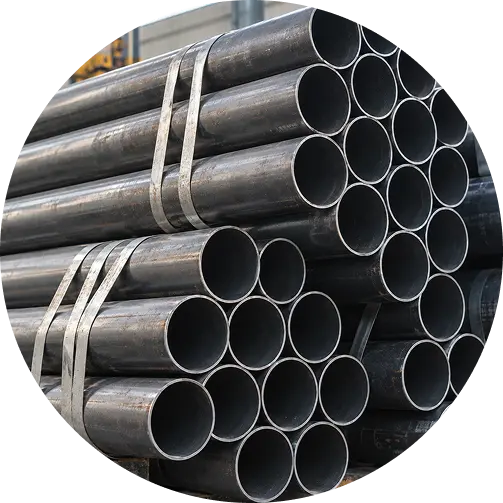
Not every tube has the same job. A tube inside a boiler deals with high heat and pressure, and it has to keep going through long operating cycles. A tube in an ordinary industrial line doesn't face that. This is a big reason hot finished seamless tubes are so common in boiler work.
The process starts with a solid steel billet. The billet is heated, pierced and rolled into a hollow tube while the steel is still hot. This route handles larger diameters and heavier walls well. But size isn't the whole story. You still have to think about the grade, the dimensions and where the tube will be used. Here's how these tubes are made and where they end up.
What Are Hot Finished Seamless Tubes?
Seamless tubes start as a single piece of steel. There are no tubes made out of flattened pieces of steel welded together along the seam. The block of steel is heated up, pierced and formed to create the hollow tube shape without the joint.
This can be useful when a design requires handling pressure, heat, and high load capacity. However, it does not guarantee that this tube will be applicable for a particular purpose, since the type of steel, wall thickness, and quality should be considered with respect to the equipment.
Hot finished seamless tubes are used when a large diameter or thick walls are required.
If you're buying one of these, don't stop at the product name. Two tubes can look the same and still differ in grade, size limits and testing. That's where suitability gets decided.
How Are Hot Finished Seamless Tubes Manufactured?
There are five stages. Each one changes the finished tube. The goal is simple: turn a solid billet into a hollow tube with the right size and material properties.
Heating the Billet
A round, solid steel billet goes into a furnace. It stays there until it reaches the temperature needed for forming.
The heat should be even all the way through the billet. Uneven heating can change how the steel behaves during piercing and rolling. It's easy to overlook, but it matters.
Piercing the Billet
The hot billet enters a piercing mill. Cross-roll piercing works the solid steel into a hollow shell.
At this point, the shell is far from its final size. Wall thickness and outside diameter still need work in the rolling stages.
Rolling and Sizing
The shell then moves through rolling equipment that brings it closer to the required size. Some lines use accu rolling and stretch-reducing technology for this step.
The tube has to reach the specified outside diameter and wall thickness. It also has to stay consistent in size from one piece to the next.
Hot Finishing
Shaping and sizing happen while the steel is still hot. That's the feature that gives the process its name.
Hot finishing can cover a range of sizes, including larger diameters and heavier walls. What a manufacturer can actually make comes down to its equipment, the steel grade and the product specification.
Cooling and Inspection
The tubes cool after rolling, in line with the manufacturing requirements. Some grades also get heat treatment to reach the specified properties.
Then comes inspection. Checks can cover dimensions, surface condition, chemical composition and mechanical properties. Some orders also call for non-destructive testing to look for certain internal or surface defects.
Which tests are done depends on the applicable standard and the customer's purchase specification.
What Are the Key Properties of Hot Finished Seamless Tubes?
A tube's properties aren't set by the manufacturing process alone. Steel composition, heat treatment, wall thickness and dimensional accuracy all affect how well it suits industrial service.
No Longitudinal Manufacturing Joint
These tubes have no longitudinal manufacturing joint. That's useful where pressure containment and steady material performance matter.
Still, having no joint doesn't mean you can skip inspection. The tube has to meet the required mechanical properties and testing criteria like any other.
Strength for Demanding Conditions
Steel grades don't all offer the same strength. A carbon steel grade that works in one application may fall short in equipment running at a much higher temperature.
So look at the specified grade and its mechanical properties. Don't assume every seamless tube can carry the same load.
Larger Diameters and Heavier Walls
One practical reason to use hot finishing is the range of sizes it covers. Depending on the facility, it can make tubes with larger outside diameters and heavier wall sections.
Some industrial equipment needs exactly that, because standard tube sizes don't meet the design requirements.
Performance at High Temperatures
It has been established that some types of carbon steel as well as some alloys of steel are specifically intended for use in high-temperature installations — pressure vessels, superheaters, and similar systems where the particular material has to maintain necessary characteristics.
The choice of a grade of material is made based on temperature and pressure of operation, coupled with appropriate design codes. The material designed for moderate temperature may not operate in high temperature conditions.
Dimensional Consistency
The tubes have to be picked in accordance with the system for which they are intended. The deviations in outside diameter, wall thickness, straightness, and length might cause problems at the stage of assembly.
There is a difference in the dimensions of hot-finished and cold-drawn tubes, which means that the tolerances must be defined beforehand.
Different Types of Hot Finished Seamless Tubes
Material grade is one of the main differences between seamless tubes. Carbon steel, alloy steel, and stainless steel each suit particular conditions.
Carbon Steel Tubes
Carbon steel tubes are used in many industrial systems, as long as the selected grade meets the strength and temperature limits.
Boilers, heat exchangers, and general process equipment are common examples. Check the working fluid as well. If corrosion could shorten the tube's service life, that changes the choice.
Alloy Steel Tubes
Alloy steel has controlled amounts of extra elements, such as chromium and molybdenum. These can improve properties needed at elevated temperatures.
Boilers, superheaters and economizers use alloy tubes because the material has to meet specific mechanical and temperature requirements there.
HMTL manufactures seamless carbon and alloy steel tubular products for industrial applications. Details of its Hot Finish Carbon alloy steel range are available on the company website.
Stainless Steel Tubes
Stainless steel should be used when there is a risk of corrosion. Different grades respond differently to moisture, chemical agents, and process fluids. Understanding the available stainless steel pipe grades helps you choose a material suited to your operating conditions.
For instance, cooling water is a good example. A specific grade may perform well in one system but not in another where the water contains high chloride concentrations. Choosing stainless steel without considering environmental conditions can lead to avoidable corrosion and maintenance issues.
Select the appropriate grade based on the fluid composition, operating temperature, and corrosion risk to ensure reliable performance and a longer service life.
Applications of Hot Finished Seamless Steel Tubes
Several industries use these tubes, but the demands change a lot from one application to the next.
Power Plants
Power plants use tubes in boilers, superheaters, economizers and other heat-transfer equipment. Some of these parts run under high pressure and temperature for long stretches.
The steel grade and wall thickness have to suit the design conditions. Inspection and testing carry real weight here too.
Oil and Gas Industry
The oil and gas sector relies heavily on the use of tubes in many types of process equipment. Depending on the function, tubes can be exposed to various temperature and pressure levels, as well as fluids with various properties.
The material and size of the tubes should be determined based on the particular application rather than industry guidelines.
Refineries and Petrochemical Plants
Substances used in refineries can mix with hydrocarbons, steam, and process fluids. The operating conditions vary from one plant to another; therefore, while something may be suitable at one place, it may not be at another.
The selection of the tubes should be made based on temperature, pressure, and fluid composition.
Boilers and Economizers
The role of transferring heat inside the boiler is played by the boiler tubes, whereby heat changes water into steam. Economizers employ economizer tubes to use the heat from the gas formed by burning and to heat the water entering the boiler.
It is important that the materials that make up both of the devices be able to work well under the prevailing conditions of operation. Whenever high temperatures are involved in the design, alloyed steels are used.
Heat Exchangers
Heat exchangers are used for transferring heat between two fluids in a way that prevents their mixing. The tubes used in heat exchangers have to be capable of withstanding certain pressure, temperature and heat transfer.
The outer diameter and wall thickness are contributing factors that influence on the mechanical design and space available for the heat transfer.
How to Choose the Right Hot Finished Seamless Tubing?
Even when the tubing looks like your drawing, it may not work for the job you have planned. But some simple steps beforehand will protect you from unnecessary hassles.
Operating Temperature and Pressure
Start with the normal working temperature and pressure. Then add start-ups, shutdowns and any change in operating conditions.
These numbers guide the grade and wall thickness. The final choice has to meet the equipment's design requirements.
Material Grade
The material grades for carbon steels, alloy steels, and stainless steels are different from each other since each material has its own characteristics and restrictions. Compare the material specification with the fluid, temperature, pressure, and corrosive environment. In case of high temperatures, see to it that the material is appropriate based on the design code.
Dimensions and Tolerances
Enumerate the outside diameter, wall thickness, and length of tubes. You might want to consider adding straightness, end treatment, and the tolerances in your list.
It is always best to settle these things before you encounter any difficulty in the future.
Applicable Standards
Name the material standard clearly in the enquiry or purchase order. The standard sets the requirements for the product. These can cover chemical composition, mechanical properties, manufacturing conditions, and testing.
Check that the standard you pick is right for the intended application.
Testing and Documentation
Different kinds of testing are applied depending on the nature of the products and their applications; testing may comprise chemical tests, tensile testing, hardness testing, flattening tests, hydraulic testing and non-destructive testing.
Certificates of materials and inspection reports will indicate whether the tube is in accordance with the agreed-upon requirements. Specify what documents and testing are necessary before manufacture.
Manufacturing Process
Hot finishing and cold drawing have different functions. Hot finished tubes are usually taken into account for large diameters and thick-walled tubes. Cold drawn tubes may offer higher dimensional tolerance and a more uniform surface.
Neither is universally applicable for all purposes. The correct choice depends on diameter, finish, material, and purpose. For more information, please see Hot Finished vs cold drawn tubes.
Why Choose Heavy Metal for Hot Finished Seamless Tubes?
Heavy Metal & Tubes (India) Pvt. Ltd. is leading Steel Tubes & Pipes Manufacturer in India, builds and supplies seamless carbon, alloy and stainless steel tubular products for industrial applications.
Its hot-finish facility uses cross-roll piercing, accu rolling and stretch-reducing mill technology. The tubes serve applications such as boilers, economizers and heat exchangers.
HMTL also makes cold-drawn seamless tubes. That gives buyers another option when they're deciding which process suits their size and surface-finish needs.
In an industrial purchase, the process is only part of the talk. Grade, dimensions, mechanical properties, and inspection needs all have to match the job. The clearer you are about these details, the easier it is for the manufacturer to see what your application calls for.
To explore the company's products and manufacturing capabilities, visit hmtl.in

Conclusion
The hot-finished seamless tubes come in handy in industry for machinery that requires consideration of size, material, and operating conditions. The manufacturing process may be used to create varied dimensions, which may include greater diameters and thicker walls.
Consider the application when choosing a tube. Check the temperature, pressure, fluid conditions, material grade and required dimensions. The applicable standard and the testing requirements matter just as much. With these in hand, you can pick a tube that meets the equipment specification.